
The Hidden Cost of Waiting Too Long: What Can Happen When a Missing Tooth Is Left Untreated?
A missing tooth can seem like a small problem, especially when there is no pain or the gap is not very noticeable. But teeth, gums, jawbone and bite work together as a system. After tooth loss, some people may experience changes in the surrounding area, while others may experience little noticeable impact.
The useful question is not simply, “How long can I wait?” It is: “What has changed in my mouth, and what could happen if I continue to wait?”
In this article, “hidden cost” refers primarily to potential changes and treatment-planning complexity—not necessarily financial cost.
What Can Happen If a Missing Tooth Is Left Untreated?
Depending on the individual, location of the missing tooth and overall oral health, leaving a missing tooth untreated may be associated with:
- Changes in the jawbone around the missing tooth
- Movement or tilting of neighbouring teeth
- Changes in the way the teeth meet
- Altered chewing function
- Changes in the spaces between teeth
- Additional treatment-planning considerations later
These outcomes are not inevitable. Age, gum health, bite, the location and number of missing teeth, surrounding teeth and available bone can all influence what happens.
What Changes Can Occur After Tooth Loss?
There is no fixed sequence that applies to every patient. Several changes can occur, independently or in combination, and their extent varies from person to person.
Jawbone changes
After a tooth is lost, the bone in that region can remodel, and the available bone volume may change over time. The extent of change varies from person to person. This is not the same as bone loss caused by periodontal disease, which can independently damage the tissues and bone supporting teeth.
If an implant is being considered, the available bone and surrounding tissues need to be assessed as part of treatment planning.
Neighbouring teeth may move
Teeth next to or above a missing space may shift, drift, tip or rotate. The likelihood and extent of movement vary. If movement occurs, it can affect the space available for replacement, the bite and cleaning access around the area.
The American College of Prosthodontists notes that arch instability after a missing posterior tooth depends on factors such as tooth location and occlusion, and that drifting, tipping, rotation and other changes are possible—not universal.
Your bite may change
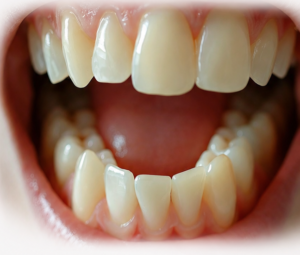
If surrounding teeth change position, the way the upper and lower teeth contact one another can also change. Some people may notice a different bite, a preference for chewing on one side or difficulty with certain foods; others may notice little or no functional change.
The location of the missing tooth matters
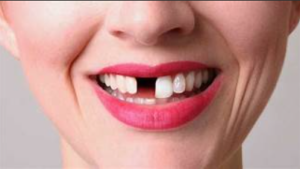
A missing front tooth is often more noticeable and may affect appearance or speech, while a missing back tooth may be less visible but can affect chewing. The American Dental Association has educational material on missing teeth and tooth replacement, while the ACP specifically notes that the effects of an unrestored posterior tooth vary with location, occlusion and other factors.
Chewing and cleaning
When teeth are missing, some people compensate by using other areas of the mouth. Depending on which tooth is missing and how many teeth are affected, chewing may become less efficient or certain foods may be less comfortable.
If neighbouring teeth shift or tilt, some areas may also be harder to clean. Maintaining the health of the remaining teeth and gums remains important regardless of whether a missing tooth is replaced.
How Long Can You Wait to Replace a Missing Tooth?
There is no universal “safe waiting period” for every missing tooth. It would be misleading to say that every patient must replace a tooth within a particular number of months or years.
Some people may live with a missing tooth for a long time without major symptoms. Others may develop changes sooner. The relevant factors include the location and number of missing teeth, gum health, surrounding teeth, bite, available bone, chewing needs and the type of replacement being considered.
The better question is: “What is the current condition of the area, and what could change if I continue to wait?”
Does Every Missing Tooth Need Immediate Replacement?
Not necessarily. Treatment should be based on the individual’s situation rather than a blanket rule.
Replacement may be recommended when factors such as function, appearance, tooth movement, the condition of surrounding teeth or future treatment planning make it appropriate. In other circumstances, monitoring may be reasonable. A dental assessment can help determine which approach fits the patient.
Replacement Options
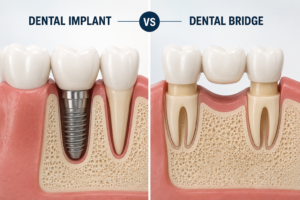
Common replacement approaches include dental implants, bridges and removable partial dentures. The appropriate choice depends on the individual.

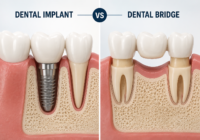
- Dental implant — replaces the root portion of a missing tooth and supports a restoration such as a crown. Bone, gums, bite and overall oral health need to be assessed.
- Dental bridge — replaces a missing tooth using neighbouring teeth or other supporting structures. The health and position of those supporting teeth are important.
- Partial denture — a removable option that can replace one or more missing teeth. The remaining teeth, gums, bite and overall oral health should be considered.
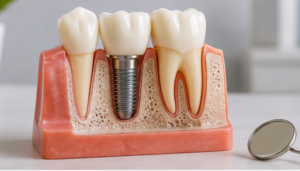
There is no universal winner. The useful question is: “Which option is appropriate for my mouth?” The American Dental Association lists bridges, dentures and implants among tooth-replacement approaches; the final choice should be based on clinical assessment and individual priorities.
What Happens During a Missing-Tooth Consultation?
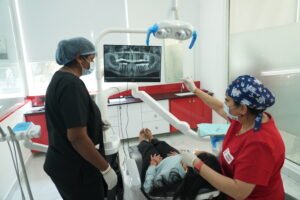
A consultation is about understanding the current situation before choosing treatment. Depending on the case, the dentist may assess:
- The missing tooth and its role in chewing, appearance or speech
- The neighbouring teeth and whether they have shifted or tilted
- Gum health and any periodontal concerns
- The available bone
- The bite
- Overall oral health
Dental X-rays or other imaging may be recommended when appropriate. The objective is to understand the current condition of the mouth—not simply the visible gap.
What If You Have Had the Missing Tooth for Years?
Waiting for years does not automatically mean treatment is impossible. The area may have changed, but several options may still be available.
An assessment can help determine whether surrounding teeth have moved, whether bone volume has changed, whether the bite has been affected, whether the gums are healthy, which replacement options are realistic and whether any preparatory treatment is needed.
In some patients, treatment may remain relatively straightforward. In others, additional planning may be required. The key is to assess rather than assume.
Can Delayed Treatment Become More Complex?
Sometimes, yes—but not for everyone. If neighbouring teeth have shifted or the bone has changed, the original space may no longer look exactly as it did when the tooth was lost. This can influence treatment planning, particularly when an implant is being considered.
This is the practical meaning of the “hidden cost” of waiting: potential changes in the mouth and the possibility of additional treatment-planning considerations, rather than a guaranteed financial penalty.
Should You Replace a Missing Tooth Even If It Doesn’t Hurt?
Pain is not the only reason to have a missing tooth assessed. Consider an evaluation if you have noticed nearby teeth moving, a different bite, difficulty chewing, food trapping, concern about appearance, interest in an implant or bridge, or if the tooth has been missing for several years and you want to understand your options.
An evaluation does not automatically mean treatment. It gives you information with which to make a decision.
The Key Message
There is no universal deadline for replacing every missing tooth. Depending on the individual, changes in bone, tooth position, bite, chewing or treatment-planning needs may or may not occur.
An assessment can help determine what has changed, what options are available, and what is appropriate for you.
Educational References
- American College of Prosthodontists. Position Statement: Posterior Single Tooth Replacement.
https://www.prosthodontics.org/about-acp/position-statement-posterior-single-tooth-replacement/
- American College of Prosthodontists. Missing Teeth: Talking Points.
https://www.prosthodontics.org/assets/1/7/ACP_Talking_points_for_Missing_Teeth_1-12-15.pdf
Lifetime Dental
At Lifetime Dental, a missing-tooth consultation can assess the missing area, surrounding teeth, gums, bite and available bone before suitable replacement options are discussed.
The aim is to develop an approach based on your mouth, needs and priorities.
Lifetime Dental
Smiles That Last Forever
Marathahalli: +91 98454 14281 / 080 4112 1397
Indiranagar: +91 77958 23300 / 080 4203 5021
Website: lifetimedental.in