
Dental Implant Cost in Bangalore: What Drives the Range in 2026?
If you are considering dental implants in Bangalore, you may have noticed that the cost of treatment can vary significantly between patients and clinics.
This can understandably raise questions.
Why does one person need a different treatment plan from another? Why do implant quotations differ? And what exactly determines the overall cost of dental implant treatment?
The answer is that dental implant treatment is highly individualised.
The cost is influenced not only by the implant itself, but also by the patient’s oral health, bone condition, number of missing teeth, type of restoration and any additional procedures that may be required.
At Lifetime Dental, we believe that understanding these factors is an important part of making an informed decision about your oral health.
What is included in dental implant treatment?
A dental implant is more than the small titanium fixture placed into the jawbone.
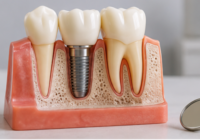
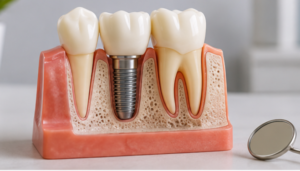
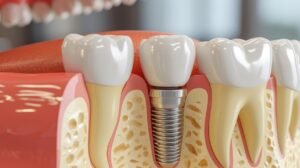
A complete implant restoration generally involves three main components:
- Implant: The fixture placed within the jawbone to replace the root of a missing tooth.
- Abutment: The connector between the implant and the final restoration.
- Crown: The visible tooth-like restoration that restores appearance and function.
Depending on the patient’s needs, additional diagnostic procedures or treatments may also be necessary.
This is why comparing implant treatment based only on the price of the implant fixture can give an incomplete picture.
What factors influence dental implant treatment costs?
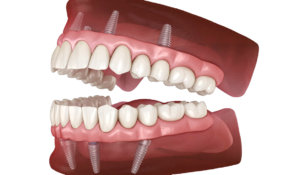
- The number of missing teeth
Replacing one missing tooth is different from replacing several teeth.
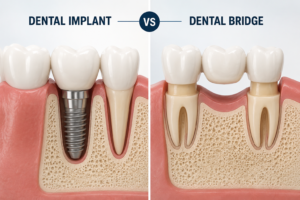
A patient with a single missing tooth may require one implant and one crown, while someone with multiple missing teeth may be suitable for an implant-supported bridge or another implant-based solution.
For patients who have lost most or all of their teeth, treatment may involve a full-arch implant rehabilitation.
The number of implants and the type of restoration required can therefore significantly influence the overall treatment.
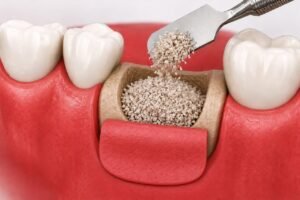
- The condition of the jawbone
Adequate bone volume and quality are important for implant placement.
After a tooth is lost, the surrounding jawbone can gradually resorb. If there is insufficient bone at the implant site, additional procedures may be considered to create an appropriate foundation for the implant.
Depending on the location and clinical situation, this may include:
- Bone grafting
- Sinus augmentation
- Other site-development procedures
Not every patient requires these procedures. A clinical examination and appropriate imaging help determine whether they are necessary.
- The implant system
There are multiple implant systems available, with differences in design, surface characteristics, components, manufacturing standards and supporting clinical evidence.
Implant selection should be based on factors such as the patient’s clinical requirements, treatment plan and long-term restorative needs.
At Lifetime Dental, the focus is not simply on choosing the most expensive or least expensive implant.
The objective is to select an implant system that is appropriate for the individual case.
- The type of dental crown
The implant replaces the root portion of a missing tooth. The crown is what ultimately restores the visible portion of the tooth.
Different restorative materials may be considered depending on factors such as:
- Location of the missing tooth
- Aesthetic requirements
- Bite and functional forces
- Available space
- Patient preferences
For example, restoring a front tooth may place greater emphasis on aesthetics, while a molar restoration may require careful consideration of chewing forces.
The choice of restoration can therefore affect the overall treatment plan.
- The complexity of implant placement
Some implant cases are relatively straightforward. Others require more detailed planning.
Factors that can increase complexity include:
- Significant bone loss
- Gum disease
- Existing infection
- Limited space
- Difficult tooth position
- Previous dental treatment
- Proximity to important anatomical structures
These factors need to be evaluated before implant placement so that treatment can be planned appropriately.
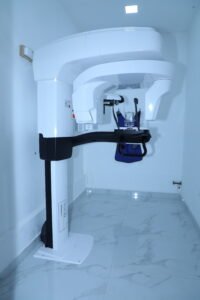
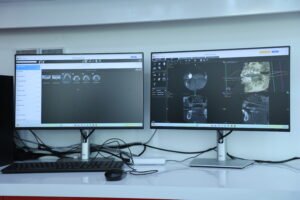
- Diagnostic imaging and digital planning
Implant treatment begins with diagnosis and planning—not surgery.
Depending on the case, your dentist may recommend dental X-rays or three-dimensional imaging such as a CBCT scan.
These images can provide information about:
- Bone height and width
- Bone anatomy
- The location of nerves and other important structures
- The implant site
- The relationship between the proposed implant and surrounding teeth
This information can help the dental team plan implant placement more accurately and identify potential challenges before treatment begins.
- The expertise involved in treatment
Implant dentistry involves several stages, from diagnosis and planning to surgical placement and final restoration.
The experience of the treating dental team, the complexity of the case and coordination between the surgical and restorative stages can all form part of the overall treatment consideration.
Rather than evaluating an implant based on a single component, it is worth looking at the complete treatment journey.
Why two dental implant https://lifetimedental.in/dental-implant-2/quotations may be different
Suppose two patients are both missing a molar.
At first glance, their treatment may appear identical.
However, one patient may have adequate bone and healthy gums, while the other may have bone loss or an existing periodontal problem.
One may require a straightforward implant placement.
The other may require additional treatment before an implant can be placed.
Even when the missing teeth are in similar locations, the underlying clinical requirements may be completely different.
This is why an implant quotation should always be considered in the context of the individual patient’s diagnosis.
What should you ask before choosing an implant treatment?
If you are comparing dental implant options in Bangalore, don’t hesitate to ask your dentist for clarity.
Useful questions include:
- What type of implant is being recommended for me?
- What does the quoted treatment include?
- Will I require bone grafting or another additional procedure?
- What type of crown will be used?
- How many appointments are likely to be required?
- What is the expected treatment timeline?
- How will the implant be monitored after treatment?
- What kind of maintenance will I need in the long term?
These questions can help you understand the treatment rather than simply comparing one number with another.
Is the cheapest dental implant necessarily the best option?
Not necessarily.
Cost is one consideration, but it should not be the only factor when making a decision about implant treatment.
The success and longevity of an implant restoration can depend on several factors, including appropriate case selection, treatment planning, implant placement, restoration, oral hygiene and long-term maintenance.
At the same time, a higher price does not automatically mean that a particular treatment is more appropriate.
The right treatment is the one that is clinically suitable for your individual needs and clearly explained to you.
How Lifetime Dental approaches dental implant treatment
At Lifetime Dental, we believe implant dentistry should begin with a proper understanding of the patient—not with a predetermined treatment or a price.
We assess the missing tooth or teeth, surrounding teeth and gums, bone availability, bite and overall oral health before recommending an appropriate treatment approach.
Where possible, we also discuss the available options, their advantages and limitations, so patients can participate in decisions about their treatment.
Our goal is simple:
To help patients understand why a particular treatment is recommended before they decide to proceed.
The bottom line
There is no universal dental implant cost because there is no universal implant case.
The overall treatment can depend on the number of missing teeth, the condition of the jawbone, the implant system, the type of restoration, the complexity of the procedure and whether additional treatment is required.
So, if you are researching dental implants in Bangalore, don’t make your decision based on a single advertised price.
Instead, ask:
“What does my treatment require, and why?”
A clear diagnosis, transparent treatment plan and realistic understanding of the procedure can help you make a more informed decision about replacing your missing teeth.
At Lifetime Dental, we believe that good implant dentistry starts with good communication.
This article is intended for general educational purposes and does not replace a clinical examination. Implant suitability, treatment options and treatment requirements vary from patient to patient.