
Dental Implant vs Bridge: How Do You Decide Which Is Right for You?
Losing a tooth can create an immediate question: Should you replace it with a dental implant or a bridge?
Both treatments can restore the appearance and function of a missing tooth. But they work in fundamentally different ways, and the better choice depends on your remaining teeth, gums, jawbone, overall oral health, aesthetic goals, timeline and long-term priorities.
The important thing to remember is that a dental implant is not automatically better than a bridge, and a bridge is not automatically the simpler choice. The right treatment is the one that suits your individual mouth and your long-term dental health.
At Lifetime Dental, we believe patients should understand their options before making a decision. Here is a practical comparison to help you have a more informed conversation with your dentist.
What Is a Dental Implant?
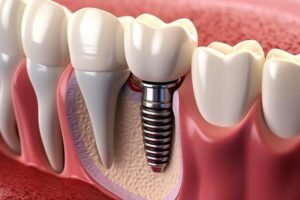
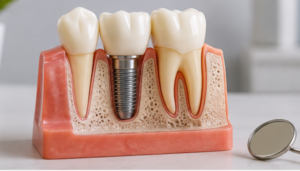
A dental implant is a replacement for the root of a missing tooth. A small implant is placed into the jawbone and, after healing, supports a dental crown that replaces the visible portion of the tooth.
Unlike a conventional bridge, an implant does not rely on neighbouring natural teeth for support.
Dental implants can be used to replace a single missing tooth or multiple missing teeth, depending on the clinical situation.
If you would like to understand the treatment in more detail, explore – “give link to Dental implants blog”
What Is a Dental Bridge?
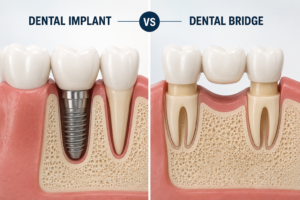
A dental bridge replaces a missing tooth by literally “bridging” the gap. In a conventional bridge, the artificial tooth is supported by neighbouring teeth that are prepared to carry the restoration.
Bridges are a well-established way of replacing missing teeth and can provide a fixed solution without implant surgery.
The type of bridge recommended depends on factors such as the location of the missing tooth, the condition of the supporting teeth, aesthetics and the number of teeth being replaced.
Dental Implant vs Bridge: The Key Differences
| Factor | Dental Implant | Dental Bridge |
| How it is supported | Supported by an implant placed in the jawbone | Usually supported by neighbouring teeth |
| Neighbouring teeth | Usually does not require preparation of adjacent healthy teeth | Conventional bridges generally require preparation of supporting teeth |
| Surgery | Requires implant placement surgery | Usually does not require implant surgery |
| Jawbone | The implant can help preserve bone at the implant site | Does not replace the missing tooth root |
| Treatment time | Usually involves a healing period before final restoration | Often completed more quickly |
| Maintenance | Requires careful brushing, cleaning and professional follow-up | Requires careful cleaning around and underneath the bridge |
| Suitability | Depends on bone, gums, remaining teeth and overall health | Depends heavily on the condition of the supporting teeth |
| Initial cost | Often higher | Often lower |
| Long-term planning | Can be particularly attractive when preserving adjacent teeth is important | Can be an effective option when supporting teeth are suitable |
This comparison is general. Your dentist needs to examine your mouth and supporting structures before recommending either treatment.
Is an Implant Always Better Than a Bridge?
No.
This is one of the most important points to understand when searching for “implant vs bridge.”
An implant may be an excellent choice when the neighbouring teeth are healthy and you want to avoid preparing them for a conventional bridge. Implants also replace the root portion of a missing tooth and can help preserve bone at the treatment site.
However, an implant involves surgery and requires adequate conditions for predictable treatment. Bone quantity and quality, gum health, oral hygiene and the health of the remaining teeth all need to be assessed. In some situations, additional procedures such as bone grafting may be required.
A bridge, meanwhile, may be an excellent solution when the adjacent teeth are already heavily restored or require crowns. It can also be appropriate when a patient prefers to avoid implant surgery or when an implant is not clinically suitable.
The goal should not be to choose the most advanced treatment. It should be to choose the most appropriate treatment.
When Might a Dental Implant Be the Better Choice?
An implant may be considered when:
- The neighbouring teeth are healthy
If the teeth on either side of the gap are strong and healthy, you may not want to prepare them simply to support a replacement tooth.
An implant can replace the missing tooth independently.
- Preserving the jawbone is important
Natural tooth roots stimulate the surrounding bone. After tooth loss, the bone in that area can remodel and reduce over time.
Because an implant is placed into the jawbone, it can provide a form of root replacement and help maintain bone around the implant site.
- You are looking for a fixed, independent replacement
A single-tooth implant with a crown can closely replicate the structure of an individual tooth without using neighbouring natural teeth as bridge supports.
- You are thinking about long-term oral health
The decision should not only be based on what is quickest today. Your dentist may also consider how the treatment affects the surrounding teeth and bone over the years.
When Might a Bridge Make More Sense?
A bridge can be particularly useful in situations such as:
- The neighbouring teeth already need crowns
If the teeth next to the missing tooth are significantly weakened, heavily filled or already planned for crowns, using them as bridge supports may make clinical sense.
- You want to avoid implant surgery
A conventional bridge does not require placement of an implant into the jawbone.
- You need a relatively straightforward tooth replacement
Depending on the case, a bridge can generally be completed without waiting for an implant to integrate with bone.
- An implant is not currently suitable
Insufficient bone, active gum disease or other clinical considerations may affect implant suitability. Some patients may require preparatory treatment before an implant can be considered.
What About Cost: Implant vs Bridge?
Cost is understandably an important part of the decision.
However, comparing only the initial price can be misleading.
A bridge and an implant have different treatment requirements, materials, appointments and maintenance considerations. An implant may involve surgical placement and, in some cases, additional procedures such as bone grafting. A bridge may involve preparation of supporting teeth and fabrication of the bridge itself.
Instead of asking only:
“Which one costs less?”
consider asking:
“Which option is appropriate for my mouth and makes sense for my long-term dental health?”
Your dentist can provide a treatment plan and explain the expected costs after examining your specific situation.
Which Looks More Natural?
Both modern implants and bridges can provide highly aesthetic results.
The final appearance depends on much more than the replacement tooth itself. Factors such as tooth colour, shape, proportions, gum contours, the position of neighbouring teeth and the quality of the restoration all contribute to the final result.
For front teeth, aesthetics can become particularly important because the gum and tooth contours are visible when you smile.
This is why treatment planning should consider both function and aesthetics, rather than simply filling the space left by a missing tooth.
Which One Lasts Longer?
There is no universal lifespan that can be guaranteed for either treatment.
The longevity of an implant-supported restoration or bridge depends on factors including:
- Oral hygiene
- Gum health
- Bite forces
- Tooth grinding or clenching
- Quality of the restoration
- Condition of supporting teeth
- Regular dental examinations
- Patient-specific factors
Dental implants are designed as long-term tooth replacements, but they are not maintenance-free. Components can loosen or wear, and complications around implants can occur if problems are not identified and managed.
Similarly, a bridge can provide long-term service when properly planned, maintained and supported by healthy teeth.
So rather than asking “Which lasts longer?”, it is more useful to ask:
“Which option has the best long-term outlook in my particular situation?”
Do You Need a CBCT Scan Before an Implant?
Not every dental implant case is identical, which is why detailed assessment matters.
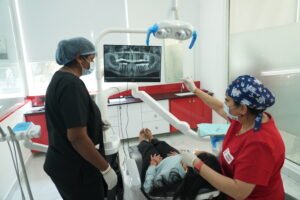
Depending on the case, three-dimensional imaging such as CBCT may be used to evaluate the available bone and the relationship of the proposed implant site to important anatomical structures.
At Lifetime Dental, CBCT imaging is available for implant planning and can provide three-dimensional information about the jaw and surrounding structures.
This type of assessment helps the dental team determine whether an implant is appropriate and how it should be planned.
What Happens During an Implant Consultation?
A good implant consultation should be more than simply receiving a price quote.
Your dentist may assess:
- The missing tooth and surrounding area
- The condition of neighbouring teeth
- Your gums and periodontal health
- Available jawbone
- Your bite and chewing forces
- Your aesthetic expectations
- Your medical and dental history
- Your preferences regarding treatment time and surgery
The dentist can then explain whether an implant, bridge or another option is appropriate.
In some cases, the best first step may actually be treating an existing dental problem before deciding how the missing tooth should be replaced.
7 Questions to Ask Before Choosing an Implant or Bridge
Before making your decision, ask your dentist:
- Are the teeth next to my missing tooth healthy enough to support a bridge?
- Do I have enough bone for an implant?
- Would I need a bone graft or another preparatory procedure?
- How will each option affect my neighbouring teeth?
- What will the treatment timeline look like?
- What maintenance will I need after treatment?
- Which option would you recommend for my specific case — and why?
The last question is particularly important.
A good treatment decision should be based on your clinical findings, not simply on which treatment is more popular.
So, Implant or Bridge — Which Should You Choose?
There is no single answer that applies to everyone.
An implant may be preferable when preserving healthy neighbouring teeth, replacing the missing root and maintaining the treatment site are important priorities.
A bridge may be preferable when the neighbouring teeth are suitable supporting teeth, when avoiding surgery is important, or when a bridge offers the most practical solution for the particular case.
And sometimes, the decision is not simply “implant versus bridge.” Other treatment possibilities may need to be considered depending on the number of missing teeth, the condition of the remaining teeth and the patient’s overall oral health.
At Lifetime Dental, our approach is to assess the complete picture before recommending a treatment. The objective is not simply to replace a missing tooth — it is to create a solution that works harmoniously with your bite, surrounding teeth, gums, aesthetics and long-term oral health.
Missing a Tooth? Start With the Right Question.
If you are considering an implant vs bridge, don’t choose based on price, online comparisons or someone else’s experience.
Your mouth is unique.
A detailed dental examination and appropriate imaging can help determine which option is suitable for you — and what the long-term implications of each choice may be.
Explore Dental Implants at Lifetime Dental{ give link to single, multiple, all on 4 implant blog} before booking your consultation.
At Lifetime Dental, we help you understand your options so you can make a decision with clarity and confidence.
Frequently Asked Questions
Is an implant better than a bridge?
Not necessarily. An implant may offer advantages such as independent tooth replacement and preservation of bone at the implant site, while a bridge may be more appropriate when the neighbouring teeth are suitable supports or when avoiding implant surgery is preferred.
Is an implant more painful than a bridge?
An implant involves a surgical procedure, whereas a conventional bridge generally does not. Local anaesthesia is used during implant placement, and your dentist will explain expected discomfort and recovery based on your procedure.
Can a bridge replace one missing tooth?
Yes. A bridge can be used to replace a single missing tooth when the surrounding teeth are suitable for supporting the restoration.
Can an implant replace multiple missing teeth?
Yes. Depending on the number and location of missing teeth, implants can be used individually or as supports for larger fixed restorations.
Do dental implants last forever?
Dental implants are intended as long-term tooth replacements, but no dental treatment can be guaranteed to last forever. Their longevity depends on factors such as oral hygiene, gum health, bite forces, maintenance and individual circumstances.
How do I know whether I am suitable for an implant?
A dentist needs to evaluate your gums, remaining teeth, available bone, bite and overall dental health. Imaging such as CBCT may be recommended when appropriate for treatment planning.
Can I get an implant immediately after tooth extraction?
Immediate implant placement is possible in selected cases, but it is not appropriate for every extraction site. The condition of the bone, gums, infection status and other clinical factors must be evaluated first.
Medical note: This article is intended for general educational purposes
Primary SEO keyword: implant vs bridge
Suggested secondary keywords: dental implant vs bridge, implant or bridge, dental bridge vs implant, tooth replacement options, missing tooth replacement, dental implants in Bangalore
Suggested SEO title: Dental Implant vs Bridge: Which Is Right for You?
Suggested meta description: Implant vs bridge? Compare dental implants and bridges, including benefits, suitability, treatment time, cost considerations and long-term factors to make an informed decision.
Suggested URL slug: /dental-implant-vs-bridge/