
Diabetes and gum disease are closely connected, and managing one can directly affect the other.
Your Mouth and Diabetes: The “Two-Way Street”
Read time: 03 minutes
India ranks second in the world for diabetes, with nearly 100 million people living with the condition. This “silent epidemic” is a major concern because South Asians are genetically more prone to insulin resistance at a younger age, often leading to undiagnosed complications.
At Lifetime Dental, we see the impact of this crisis firsthand. Because diabetes and gum disease share a “two-way street,” India’s rising diabetes rates have created a parallel dental crisis. High blood sugar weakens your mouth’s ability to fight bacteria, while the resulting gum infections make it even harder for you to stabilize your glucose levels. Managing your oral health isn’t just about your smile—it is a critical part of managing India’s second-largest health challenge.
What is Gum disease?
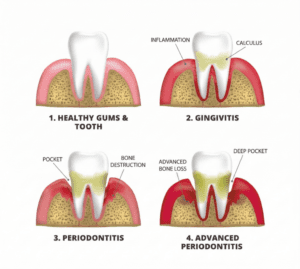
Gum disease begins as gingivitis, a reversible inflammation of the gums caused by plaque buildup that leads to redness and bleeding. If left untreated, it progresses into periodontitis, a chronic inflammatory condition where the inner layer of the gum and bone pull away from the teeth to form infected pockets. This advanced stage causes permanent damage to the supporting bone and connective tissue, which can ultimately lead to tooth loss if not professionally managed.
We believe your smile is a window into your overall well-being. Modern medicine has changed how we look at oral health; we now know that your mouth is a mirror of your body’s health. The strongest connection we see in our practice is the link between diabetes and gum disease (periodontal disease).
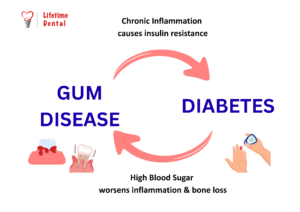
It is a “two-way street”: diabetes makes gum disease more aggressive, and untreated gum disease makes it much harder to keep your blood sugar in check.
1. How Diabetes Affects Your Gums
If you are living with diabetes, your risk of severe gum disease is three times higher. At your Lifetime Dental checkups, we look for these specific issues:
- Persistent Swelling: High blood sugar triggers inflammation that can damage the bone holding your teeth in place.
- Slow Healing: Because of “oxidative stress,” your body’s “repair crew” moves slower, making it harder for your gums to bounce back from infection.
- Weakened Defence: Diabetes can hamper your white blood cells, making it easier for bacteria in dental plaque and tartar to cause damage.
2. How Your Gums Affect Your Diabetes
The “second way” of the street often surprises our patients: healthy gums can actually help you manage your diabetes.
- The Blood Sugar Spike: Severe gum infection causes inflammation throughout the body. This can lead to insulin resistance, making it harder for your body to process glucose.
- The Power of a Deep Cleaning: Research shows that a professional deep cleaning (scaling and root planing) can lower your HbA1c levels (your 3-month blood sugar average) by up to 0.6%.
- Medicine in a Chair: That reduction is so significant it can be equivalent to adding a second oral medication to your daily routine!
3. Other Warning Signs
Diabetes doesn’t just affect the gums. Keep an eye out for these “red flags” and let us know if you experience:
- Dry Mouth (Xerostomia): Reduced saliva flow can make your mouth feel like a desert, significantly increasing your risk for cavities.
- Oral Thrush: High sugar levels in your saliva can create a breeding ground for fungal infections, often appearing as white patches.
- Burning Mouth: A stinging or tingling sensation is often linked to diabetic neuropathy (nerve damage) and should be evaluated by our team.
4. The “Ozempic Teeth” Alert (GLP-1 Medications)
Are you taking medications like Ozempic, Wegovy, or Mounjaro? These are incredible tools for health, but they require extra dental care:
- Acid Reflux & Erosion: These meds slow down digestion, which can lead to acid reflux. This acid eats away at your tooth enamel.
- Protection is Key: If you are on a GLP-1, staying hydrated and using fluoride-based products is essential to prevent rapid tooth decay.
5. Your Visit to Lifetime Dental: Know Your Numbers
To ensure your safety during procedures, we follow specific guidelines based on your blood sugar:
- The Safe Zone: For standard treatments like extractions, we look for a fasting blood sugar of 180 mg/dL or lower.
- Surgery Goals: For dental implants or essential surgery, a Target HbA1c of under 8.0% helps ensure you heal properly.
- Safety First: If your blood sugar is above 240-250 mg/dL, we may recommend delaying treatment to avoid the risk of infection.
Lifetime Dental’s Tips for a Healthy Smile
- The 2/2 Rule: Brush twice a day for two minutes and use interdental brushes or floss to clean where your toothbrush can’t reach.
- Stay Hydrated: Drink plenty of water to wash away sugar and combat dry mouth.
- Keep Us in the Loop: Always share your latest HbA1c test report and any medication changes with us.
- Regular Screenings: Visit us at least twice a year so we can catch “silent” inflammation before it impacts your health.
By taking care of your gums at Lifetime Dental, you aren’t just saving your smile—you are taking a proactive step in managing your diabetes and protecting your entire body.
References:
https://pubmed.ncbi.nlm.nih.gov/23627322/
https://pmc.ncbi.nlm.nih.gov/articles/PMC11893427/
Lifetime Dental
Lakshminarayana Pura, Marathahalli,
Email: drsharondias@gmail.com
| Monday | 09:30 - 20:00 |
| Tuesday | 09:30 - 20:00 |
| Wednesday | 09:30 - 20:00 |
| Thursday | 09:30 - 20:00 |
| Friday | 09:30 - 20:00 |
| Saturday | 09:30 - 20:00 |
| Sunday | 10:30 - 18:00 |