
The “Why” Behind the Smile: A Parent’s Guide to Sensory-Safe Oral Health
Read time: 3 to 5 minutes
Autism Spectrum Disorder (ASD) is a lifelong neurodevelopmental condition that affects how a person perceives the world and interacts with others. It is not a disease or a “behavioural problem” that can be cured; rather, it is a different way of brain wiring that begins in early childhood.
The term “spectrum” is crucial because autism manifests differently in every individual. While two people may share the same diagnosis, their strengths, challenges, and support needs can vary significantly.
Navigating dental health when your child is on the Autism Spectrum (ASD) requires a unique blend of clinical strategy and parental intuition. We know that for many families, a dental visit isn’t just a “check-up”—it is a major sensory event.
At Lifetime Dental our goal is to move past the “battle” of brushing and create a sustainable, stress-free path to a healthy smile.
Understanding the Sensory Connection
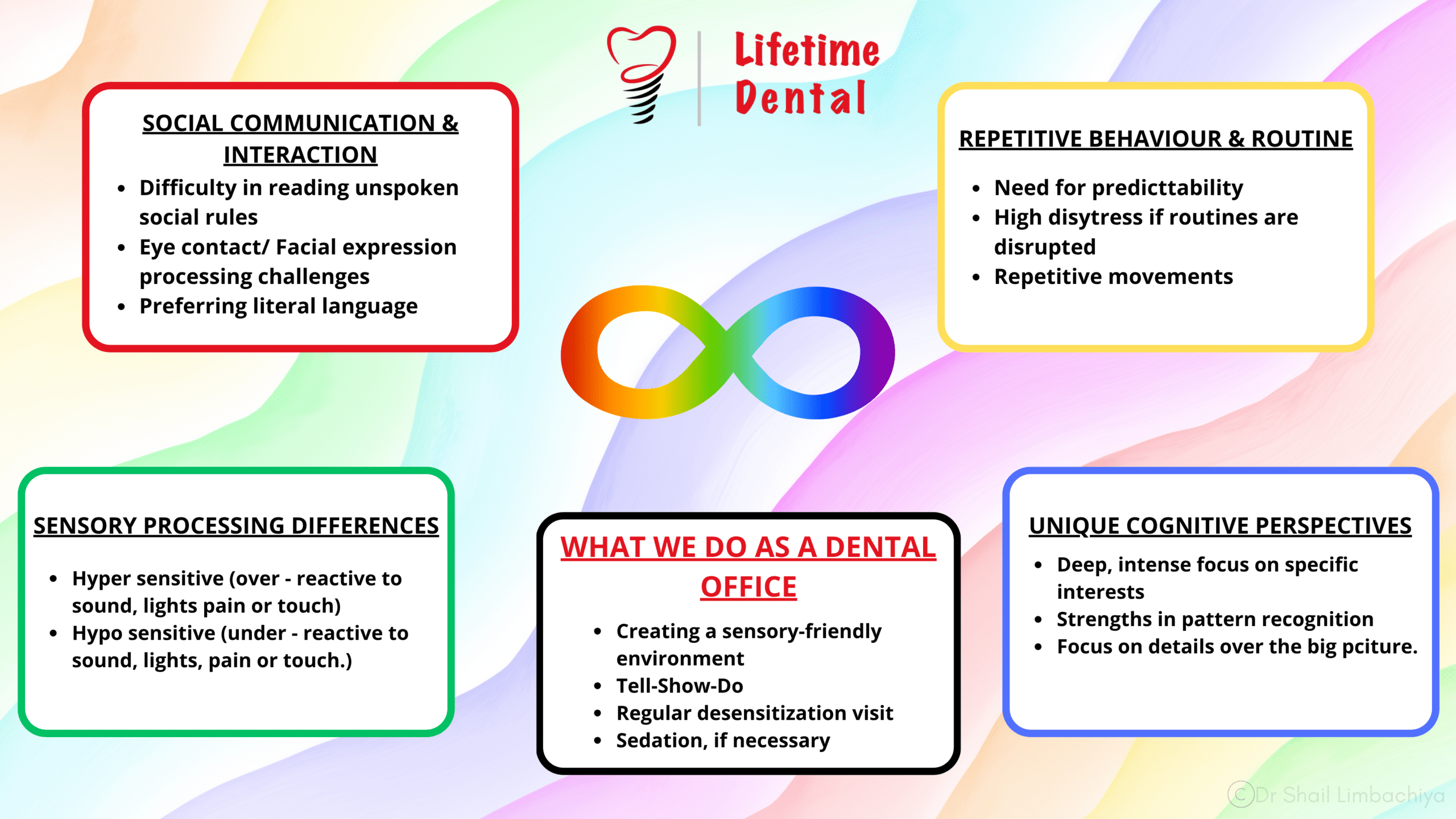
Autism isn’t a behaviour problem; it’s a difference in how the brain processes the environment. In the dental chair, this often looks like:
- Sensory Overload: The hum of a toothbrush can feel like a jackhammer, and the “zing” of mint toothpaste can be physically painful.
- Routine Reliance: Breaking a daily schedule to visit a new office can trigger high anxiety.
- Dietary Choices: Many children seek comfort in “beige” starchy foods (crackers, nuggets), which unfortunately stick to teeth and promote rapid decay.
At-Home Prevention: The “Low-Stress” Toolkit
You don’t need a perfect two-minute scrub to make a difference. Clinical health can be achieved through small, manageable steps.
Brushing Strategies
- The Three-Sided Brush: If your child struggles with manual dexterity or won’t open wide, these brushes hug the teeth, cleaning the front, back, and top all at once.
- Flavour Alternatives: e.g.: If mint is a trigger, switch to unflavoured or mild fruit pastes with fluoride. If the child cannot spit, wipe off the paste with a clean cloth.
- The “Dry Brush” Method: If foam is the issue, skip the paste entirely. Physically removing plaque with a dry brush is far better than not brushing at all.
Smart Dietary Swaps
- The Water Buffer: If your child prefers starchy snacks (crackers/pretzels), have them “swish and swallow” water immediately after eating to rinse the “glue” out of their molars.
- Hidden Sugars: Dilute juice boxes with 90% water and use a straw to keep the sugar away from the tooth enamel.
- Saliva Support: Many medications cause dry mouth, which speeds up cavities. Consider Xylitol melts at bedtime to keep the mouth hydrated and protected, but only after consulting your doctor.
Spotting “Silent” Dental Pain
Because many autistic children process pain differently or may be non-verbal, dental issues often go unnoticed until they are advanced. Watch for these red flags:
- Behavioural Shifts: A sudden increase in meltdowns or irritability.
- Physical Cues: Tapping the cheek, grinding teeth more than usual, or refusing favourite cold/ crunchy foods.
- The Flashlight Check: Once a week, do a quick “lap exam” at home. Look for white chalky spots (early decay) or dark pits.
How We Adapt Our Practice for You
We believe the dentist’s office should adapt to the child, not the other way around. Here is our “Sensory-First” commitment:
- The “Meet & Greet” Visit: We offer short, no-pressure tours where your child can touch the equipment and sit in the chair without any actual cleaning.
- Environmental Control: We can dim the lights, turn off noisy suction, and provide headphones or comfort toys for a peaceful & pleasant experience.
- The Stop Signal: We teach every child a simple hand signal. If they raise their hand, we stop immediately. This builds the trust they need to feel safe.
- Sedation Options: For children with profound sensory needs or extensive dental work, we offer safe, “sedation dentistry” so most of the work can be finished in one trauma-free visit.
Your Appointment Checklist
- 7 Days Before: Use “Social Stories” (simple picture guides) to walk them through what to expect.
- 3 Days Before: Role-play at home. Let them be the dentist and “count” your teeth.
- Day Of: Bring a “Sensory Bag” with noise-cancelling headphones, favourite sunglasses, and a comfort toy or anything specific to the child.
We’re in This Together
Dental health is a marathon, not a sprint. Whether your child is ready for a full cleaning or just a quick look in the mirror, we are here to support your family with patience and expertise.
References:
- https://pubmed.ncbi.nlm.nih.gov/?term=autism
- https://pubmed.ncbi.nlm.nih.gov/?term=autism+dental+care