
Why Healthy Teeth & Gums Protect Your Heart, Brain, and Body?
Your mouth is not a separate entity but an integral part of your body. Dental health problems, such as tooth decay and gum disease, can have more severe consequences on your overall health than just the loss of a beautiful smile.
Here is a breakdown of how the health of your mouth connects to the health of your body.
The Two Main Health Risks from Your Mouth:
Systemic health risks often originate from two predominant forms of oral issues:
Dental Caries (Cavities): Neglected caries represent the most common human disease throughout the world. If the bacterial infection of a cavity is left untreated, it spreads to the innermost part of the tooth, as it develops a dental abscess-a small pocket of pus. Such an infection then rapidly spreads through the body and may result in serious, life-threatening complications, such as deep neck infections and sepsis, if left untreated.
Gum Disease: It is a chronic infection of the gum and bone tissues supporting your teeth. In contrast to an acute abscess, advanced gum disease creates a persistent, low-level “reservoir” of infection. This reservoir constantly pumps pro-inflammatory chemicals and bacteria into your bloodstream, thereby inducing chronic, body-wide inflammation. This sustained inflammation serves as the primary mechanism linking gum disease to major chronic illnesses.
The Inflammation Connection: Heart, Brain, and Metabolism:
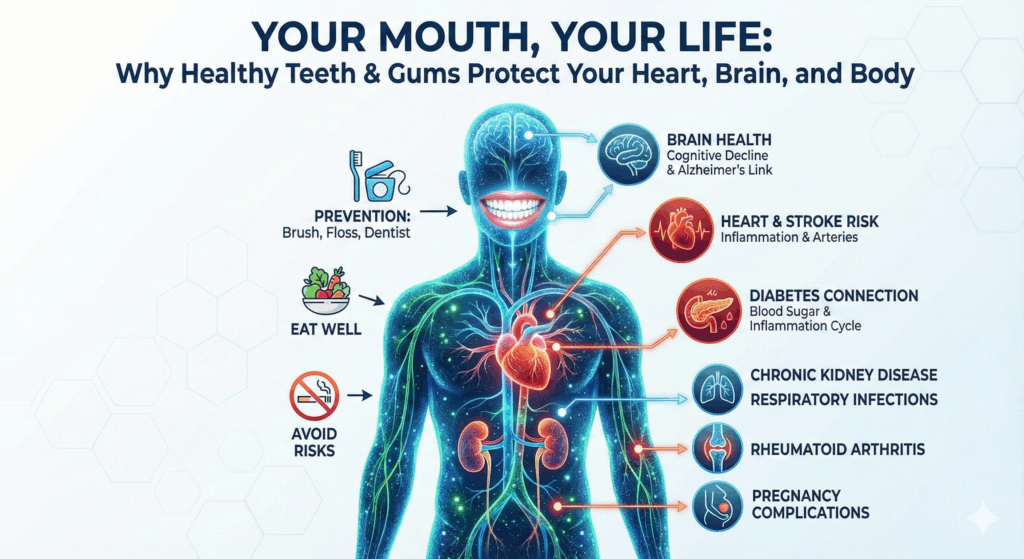
Chronic inflammation associated with gum disease is strongly associated with major systemic conditions:
1. Diabetes: A Two-Way Street
The association of gum disease with diabetes is studied most, and it is a vicious cycle:
Diabetes Makes Gum Disease Worse: If your blood sugar is not in control, you are more prone to serious gum infections.
Gum Disease Makes Diabetes Worse: The chronic inflammation in the gums makes your body’s use of insulin inefficient, raising your blood sugar levels.
The Good News: Treatment of gum disease can result in a detectable decrease in your long-term blood sugar, HbA1c, by about 0.4 to 0.6%. This clinical benefit is comparable to adding an anti-diabetic medication to a patient’s regimen.
2. Heart Disease and Stroke
Periodontal infection significantly increases cardiovascular risk independently of conventional risk factors:
Arterial Hardening: Bacteria and inflammation indicators from gum infection pass into the bloodstream and can accelerate the process of hardening and narrowing of arteries, also known as atherosclerosis.
Stroke Risk: Studies have linked active gum disease, such as bleeding gums, to higher systolic blood pressure. Individuals with gingivitis have been found to be 2.4 times more likely to have severely blocked brain arteries.
Treatment Benefit: Intensive periodontal treatment was found to reduce systemic inflammatory markers and can improve blood pressure and overall cardiovascular risk scores.
3. Brain Health and Alzheimer’s Disease
The bacteria responsible for gum disease, especially P. gingivalis, have been implicated in neurodegenerative disorders such as Alzheimer’s Disease (AD).
Bacterial Invasion: The components of this bacterium, toxic proteins included called gingipains, are carried in tiny capsules to the brain.
Worsening pathology: Once in the brain, these proteins may accelerate the formation of the amyloid-beta plaques and tau tangles that are hallmarks of Alzheimer’s disease. So, periodontitis is considered a risk factor for cognitive decline.
4. Other Links
Gum disease is also linked to:
Complications in Pregnancy: These include an increased risk of adverse events such as preterm birth and low birth weight.
Rheumatoid Arthritis (RA): The same bacteria present in gum disease have been implicated in the activation of the body’s immune response that causes RA.
CKD: Gum disease is one of the common and serious complications of Chronic Kidney Disease (CKD), which heightens the mortality rate among patients.
Respiratory infections: Oral bacteria aspirated into the lungs may cause infections, such as pneumonia.
Prevention and Care: the Simple Solution
Since oral diseases share many common risk factors among the chronic systemic diseases, such as smoking and high-sugar diets, oral hygiene is one of the easiest and least expensive ways to improve your whole-body health. The best defence involves consistent preventative care:
Brush: Brush your teeth for two minutes, twice a day.
Floss: Clean between your teeth daily.
Eat Well: Limit sugary beverages and snacks.
See Your Dentist: Regularly visit your dentist for checkups and cleanings.
Remember, preventive dental care will always be better than waiting for an expensive restorative or emergency procedure.
Citations:
-
https://www.ada.org/resources/
ada-library/oral-health- topics/oral-systemic-health -
https://docs.google.com/
document/d/1vYVx9UIO1rTt_ svfBNK4CCD1y9vp55uMeca03D69hh0 /edit?tab=t.0
Lifetime Dental
Lakshminarayana Pura, Marathahalli,
Secondary phone: +919845414281
Email: drsharondias@gmail.com
URL: https://lifetimedental.in/
| Monday | 09:30 - 20:00 |
| Tuesday | 09:30 - 20:00 |
| Wednesday | 09:30 - 20:00 |
| Thursday | 09:30 - 20:00 |
| Friday | 09:30 - 20:00 |
| Saturday | 09:30 - 20:00 |
| Sunday | 10:30 - 18:00 |